


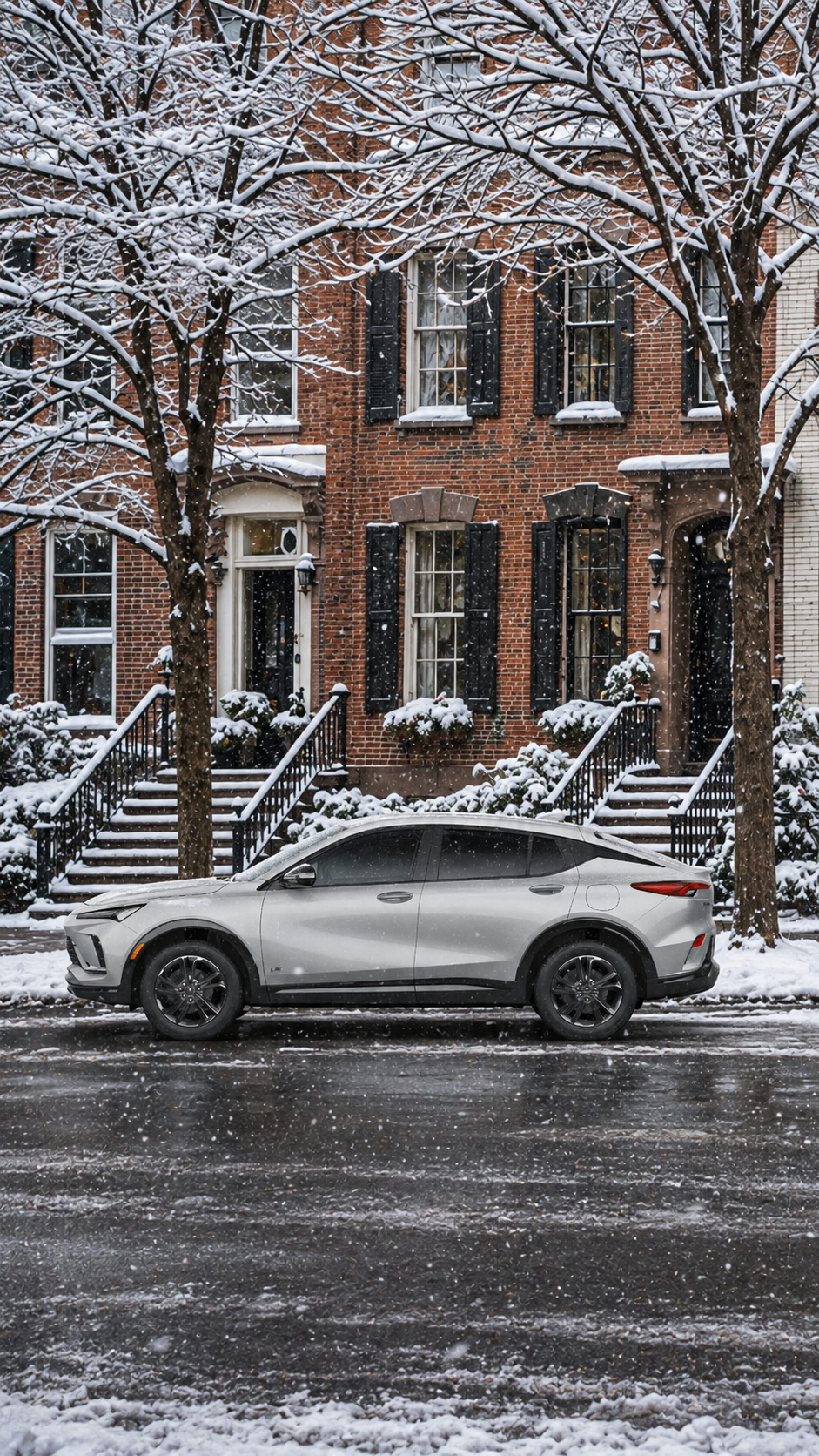
Is the Buick Envista Good in Snow? What Chicago-Area Drivers Should Know Chicago winters can be unpredictable. One morning, you're cruising down I-57 under clear skies. The next, you're brushing snow off your windshield and navigating icy intersections on your way to work. If you're shopping for a new Buick Envista in Matteson, IL, you might be wondering: Is the Buick Envista actually good in snow? The short answer: Yes—the 2026 Buick Envista handles typical Chicago winter driving conditions well when equipped with appropriate tires and driven carefully. It comes standard with front-wheel drive (FWD), StabiliTrak electronic stability control, traction control, and an engine block heater, though it does not offer all-wheel drive (AWD). For drivers who regularly encounter deep, unplowed snow or rural roads, an AWD-capable SUV like the Buick Encore GX is worth considering. At Arnie Bauer Buick GMC in the Matteson Auto Mall—right off I-57 and Lincoln Highway (US-30)—we help drivers from Tinley Park, Frankfort, Mokena, Olympia Fields, Richton Park, and across Chicago's south suburbs find vehicles built for real Midwest commutes. Here is a closer look at how the 2026 Envista performs in snow, its exact winter specs, and how it compares to Buick's AWD lineup. 2026 Buick Envista Winter Driving: Quick Facts Before diving into the details, here is what Illinois drivers should know about the 2026 Buick Envista's winter capabilities: Winter Driving Question 2026 Buick Envista Answer Does the Envista have AWD? No—front-wheel drive (FWD) only across all trims Can the Envista drive in snow? Yes, handles light to moderate snow well with proper tires Does it have traction & stability control? Yes—standard Traction Control and StabiliTrak ESC Does it come with an engine block heater? Yes—standard on the 1.2L Turbo engine What is the ground clearance? Approximately 7.1 inches Are winter tires recommended? Yes—strongly recommended for frequent snow and sub-zero commutes Are heated seats & steering wheel available? Yes—available on Preferred, Sport Touring, and Avenir Which Buick SUVs offer AWD? Encore GX (available), Envision (standard), and Enclave (available) Can the 2026 Buick Envista Handle Snow? Yes. The 2026 Buick Envista can handle light to moderate snow and slushy commutes when equipped with appropriate tires and driven safely. Unlike rear-wheel-drive vehicles that push from the back, the Envista sends power from its 1.2L Turbocharged engine (137 horsepower and 162 lb-ft of torque) directly to the front wheels. With the engine's weight positioned directly over the front drive axle—and a balanced 3,137-lb curb weight —the Envista generates solid forward traction when pulling away from slick intersections on Cicero Avenue or navigating lightly snow-covered residential streets in Matteson. Its roughly 7.1 inches of ground clearance also gives it more room to clear plowed snow ridges at the end of your driveway than a traditional compact sedan. However, front-wheel drive has clear limits: Deep, unplowed snow accumulation Steep, untreated icy inclines Drifting snow on open rural roads If your daily drive sticks primarily to regularly plowed arteries like I-57, I-80, and Route 30, the Envista provides dependable winter capability. If you routinely drive unplowed backroads in Will County before plows roll through, comparing the Envista against an AWD Buick SUV is a smart move. Does the Buick Envista Have All-Wheel Drive? No. The 2026 Buick Envista is engineered exclusively with front-wheel drive. All-wheel drive is not available on the Preferred, Sport Touring, or Avenir trims. While AWD distributes power between the front and rear wheels to help accelerate on slick pavement, it does not automatically mean every Chicagoland driver needs it—or that AWD makes a vehicle invincible on ice. Many drivers in Matteson, Homewood, Tinley Park, and Park Forest commute year-round in front-wheel-drive crossovers without issue. More importantly, AWD only helps you accelerate—it does not help you brake or corner on ice. Stopping distance and steering grip on frozen pavement depend almost entirely on your tires and driving speed. What Buick Envista Features Help With Winter Driving? Even without AWD, the 2026 Envista comes equipped with several mechanical and electronic systems designed for cold-weather control and comfort: StabiliTrak Electronic Stability Control Standard on every 2026 Envista, StabiliTrak continuously monitors steering angle and vehicle direction. If it detects a skid or loss of lateral traction on an icy patch, it automatically applies individual wheel brakes and adjusts engine torque to help keep you on your intended path. Traction Control System When accelerating from a stop on packed snow—such as turning onto Lincoln Highway during a morning flurry—the Envista's traction control detects front-wheel slip and modulates power to help the tires regain grip. Anti-Lock Braking System (ABS) Standard 4-wheel ABS prevents wheel lockup during sudden braking on wet or snow-covered asphalt, allowing you to maintain steering control while slowing down. Standard Engine Block Heater Often overlooked by shoppers, the 2026 Buick Envista includes a standard engine block heater. Plugging it in during extreme sub-zero Chicago cold snaps warms the engine coolant before startup, reducing mechanical strain and helping your cabin heater warm up faster. Available Heated Seats, Heated Steering Wheel, and Remote Start Cold-weather visibility and comfort play a major role in winter safety. Depending on trim and package selection, the Envista offers: Remote Vehicle Starter System to defrost your windshield before you step outside Heated front seats Heated, wrapped steering wheel Heated power-adjustable outside mirrors to melt away ice buildup Browse our new Buick Envista inventory in Matteson to compare Preferred, Sport Touring, and Avenir models equipped with these cold-weather packages. Are Winter Tires Worth It for a Buick Envista in Illinois? Yes—for Chicago-area drivers who commute before plows clear neighborhood streets, dedicated winter tires dramatically outperform all-season tires in braking, cornering, and deep snow once temperatures drop below 45°F. All-season rubber hardens in freezing Illinois weather, losing flexibility and grip. Winter tires use specialized cold-weather rubber compounds and deeper, multi-directional tread sipes engineered to bite into packed snow and ice. According to the National Highway Traffic Safety Administration (NHTSA), dedicated winter tires provide measurably superior traction and shorter stopping distances in snow compared to all-season tires. In fact, a front-wheel-drive Envista fitted with four dedicated winter tires will routinely out-brake and out-corner an AWD SUV running worn all-season tires. Tire Size Tip by Envista Trim When shopping trims or winter wheel packages, keep wheel size in mind: Preferred: Standard 17-inch wheels (taller tire sidewalls absorb winter potholes better and keep replacement winter tires affordable) Sport Touring: Standard 18-inch gloss-black wheels Avenir: Standard 19-inch aluminum wheels How to Prepare Your Envista's Tires for Winter Before the first major Lake Michigan snowband hits the south suburbs: Check tread depth: Ensure you have at least 4/32" to 6/32" of tread remaining before snow season starts. Monitor PSI monthly: Tire pressure drops roughly 1 PSI for every 10°F drop in ambient temperature. Install winter tires in sets of four: Never mix two winter tires with two all-season tires, as uneven grip can cause unpredictable handling. Verify factory specs: Stick to the OEM load rating and tire size listed on your driver-side door jamb placard. Not sure how much winter life your current tires have left? Schedule an inspection with the Certified Service team at Arnie Bauer Buick GMC Service Center at 5525 Miller Circle Drive in Matteson, or call our Service Department directly at (708) 323-3813. You can also take a look at our tire finder to find the perfect fit in minutes. Buick Envista vs. Encore GX: Which Is Better for Snow? If you love Buick's modern styling and interior tech but want available all-wheel drive, the 2026 Buick Encore GX is the closest alternative in the lineup. Here is how the two small SUVs stack up for Chicago-area winters: Winter & Daily Driving Factor 2026 Buick Envista 2026 Buick Encore GX Drivetrain Front-Wheel Drive (FWD) only Standard FWD / Available AWD Engine Block Heater Standard Standard Traction & Stability Control Standard StabiliTrak + TCS Standard StabiliTrak + TCS EPA Fuel Economy 28 City / 32 Hwy MPG 26 City / 28 Hwy MPG (AWD) Max Cargo Volume 42.0 cu. ft. 50.2 cu. ft. Best Fit For Plowed I-57/US-30 commutes, sleek coupe-SUV style & max MPG Unplowed side streets, Will County rural roads & extra cargo If your priority is lower upfront cost, higher highway fuel efficiency, and sleek styling for suburban commuting, the Envista is tough to beat. If you want AWD peace of mind and extra cargo room, the Encore GX deserves a test drive. Compare available models in our new Buick SUV inventory in Matteson. Is the Buick Envista a Good SUV for Chicago Commuters? Yes. Winter capability is only one piece of the puzzle for daily drivers in the south suburbs. With an EPA-estimated 28 city / 32 highway MPG, the 2026 Buick Envista keeps fuel costs low whether you're commuting north on I-57, running errands along Route 30 between Frankfort and Matteson, or navigating tight parking lots in Orland Park and Tinley Park. Inside, its 11-inch diagonal ultrawide infotainment display with wireless Apple CarPlay® and Android Auto™ makes it easy to pull up real-time IDOT winter traffic alerts and weather routing without taking your eyes off the road. Five Winter Driving Tips for Buick Envista Owners Double Your Following Distance: Stopping distances on packed snow and black ice can be three to ten times longer than on dry pavement—leave extra space on high-speed stretches like I-57 and Cicero Avenue. Use Gentle Throttle and Brake Inputs: Smooth, gradual pedal pressure prevents front wheelspin on takeoff and reduces the chance of sliding into intersections. Check Cold Tire Pressure Weekly: Cold snaps trigger low-tire-pressure warnings fast; top off tires to the PSI listed on your door jamb before hitting the highway. Clear Snow From All Sensors and Roofs: Brush snow off your headlights, taillights, roof, and front grille radar/camera sensors so driver-assistance features function properly. Know When to Wait Out Severe Squalls: Even the best-equipped vehicle struggles in whiteout conditions or freezing rain. When local advisories warn against travel, delaying your trip is always the safest call. Frequently Asked Questions About the Buick Envista in Snow Is the 2026 Buick Envista good in snow? Yes. The 2026 Buick Envista handles light to moderate snow and plowed Chicagoland roads reliably when equipped with good tires and driven cautiously. Its front-wheel-drive layout places engine weight over the front wheels for solid takeoff traction, backed by standard StabiliTrak stability control and traction control. Does the Buick Envista come with AWD? No. Every 2026 Buick Envista trim—Preferred, Sport Touring, and Avenir—is front-wheel drive only. Shoppers who want all-wheel drive should look at the Buick Encore GX, Buick Envision, or Buick Enclave. Is front-wheel drive enough for Chicago winters? Yes, for most Chicago-area drivers. If your daily routine involves regularly plowed highways and suburban streets around Matteson, Tinley Park, and Frankfort, front-wheel drive paired with quality tires is typically more than enough. Drivers on unplowed rural roads may prefer AWD. Does the Buick Envista have traction control? Yes. All 2026 Buick Envista models come standard with electronic traction control, StabiliTrak electronic stability control, and a 4-wheel anti-lock braking system (ABS) to help maintain grip and steering control on slippery roads. Does the Buick Envista need winter tires? While not legally required in Illinois, a set of four dedicated winter tires is strongly recommended if you drive frequently in snow, slush, and sub-freezing temperatures. Winter tires noticeably improve braking and cornering grip compared to all-season tires. Which Buick SUVs offer all-wheel drive? Three Buick SUVs offer all-wheel drive: the 2026 Buick Encore GX (available AWD), the 2026 Buick Envision (standard AWD), and the 2026 Buick Enclave (available AWD). Where can I test-drive a 2026 Buick Envista in Matteson, IL? You can test-drive the 2026 Buick Envista at Arnie Bauer Buick GMC, located at 5525 Miller Circle Drive, Matteson, IL 60443 in the Matteson Auto Mall (just off I-57 and US-30). We serve drivers from Matteson, Tinley Park, Frankfort, Mokena, Olympia Fields, Richton Park, Homewood, and Park Forest. Call our sales team at (708) 843-9295 to confirm trim availability.
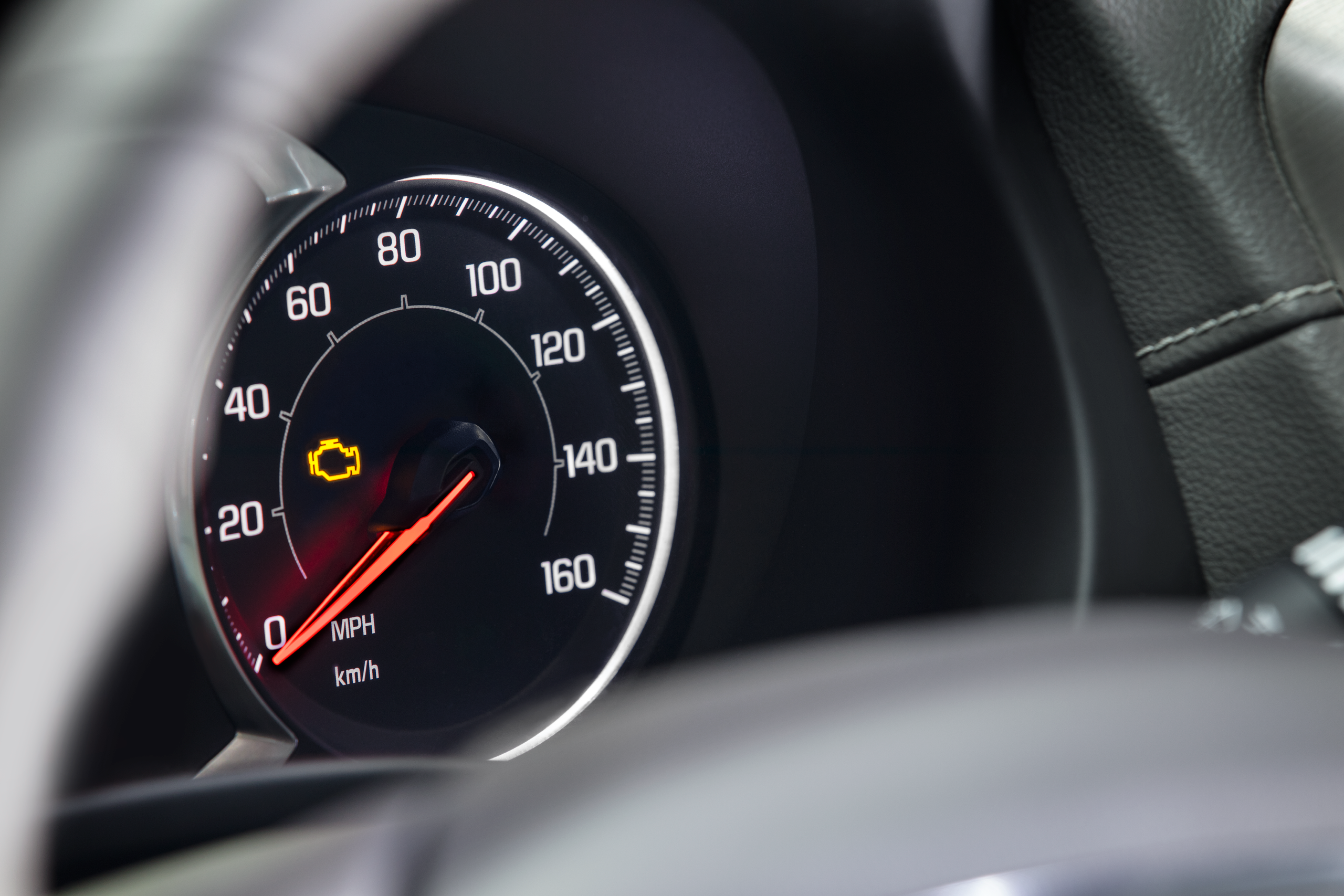
Why Is My Buick or GMC Check Engine Light On? (Solid vs. Flashing Guide)
Check Engine Light On in Your Buick or GMC? What It Means and When to Worry Few things change the mood of a morning commute down Cicero Avenue faster than an amber engine symbol lighting up on the dash. The check engine light is one of the most common reasons drivers from Matteson, Olympia Fields, Richton Park, and Tinley Park visit our service drive—appearing on everything from a newer Buick Envista to a high-mileage GMC Sierra. The good news is that the light is an early warning message, not an immediate verdict. Understanding what the light is signaling helps you protect your engine, avoid costly catalytic converter damage, and decide how quickly to schedule service. What Does the Check Engine Light Mean on a Buick or GMC? On a Buick or GMC, an illuminated check engine light—technically called the Malfunction Indicator Lamp (MIL)—means the Engine Control Module (ECM) has detected a sensor reading or system performance value outside factory specifications and stored an OBD-II Diagnostic Trouble Code (DTC). Modern General Motors powertrains continuously monitor fuel trim, ignition timing, turbocharger boost, exhaust oxygen levels, and evaporative emissions. When a reading falls out of range, the computer logs a trouble code and captures "freeze-frame" data—a snapshot of engine temperature, RPM, and vehicle speed at the exact moment the fault occurred. While a basic code points toward the affected circuit or system, hands-on pinpoint testing is required to confirm which specific part failed. Solid vs. Flashing Check Engine Light: How Urgent Is It? A solid check engine light indicates a non-emergency fault that should be diagnosed soon, whereas a flashing check engine light signals an active engine misfire that can rapidly overheat and destroy your catalytic converter. Dashboard Warning Status What Is Happening Safe to Drive? Recommended Action Solid Amber Light (Normal performance) An emissions, sensor, or minor fuel/air fault has been stored in the ECM. Yes, for short-term normal driving. Check your fuel cap and schedule a diagnostic appointment within a few days. Flashing Amber Light An active cylinder misfire is dumping raw, unburned fuel into the hot exhaust system. No —risk of severe catalytic converter damage. Ease off the throttle immediately, avoid highway speeds or towing, and arrange immediate service or towing. Solid or Flashing Light + Symptoms (Rough idle, stalling, power loss, overheating, or fuel/burning odor) Active mechanical, ignition, fuel delivery, or cooling system failure. No —risk of engine damage or stranding. Pull over safely, shut off the engine, and call our service team at 708-323-3813. What Are the Most Common Causes of a Check Engine Light in a Buick or GMC? The most frequent triggers on Buick and GMC vehicles include loose or failing fuel caps, evaporative emissions (EVAP) purge valve leaks, worn spark plugs or ignition coils, oxygen or mass airflow sensors, and turbocharger intake leaks. Loose or worn fuel cap (or capless fuel neck seal): A compromised seal allows fuel vapors to escape, triggering EVAP leak codes such as P0442 or P0455. While many GM models display a separate "Tighten Gas Cap" message on the Driver Information Center, an aging seal can still illuminate the check engine light. EVAP canister purge valves and vent solenoids: Common across GM SUVs and trucks, a stuck purge valve can trigger check engine codes and occasionally cause hard starting right after refueling. Ignition misfires (spark plugs and coil packs): Worn iridium spark plugs or a failing individual ignition coil can cause single-cylinder ( P0301 – P0308) or random ( P0300) misfires, resulting in rough idling and sluggish acceleration. Oxygen (O2) and Mass Airflow (MAF) sensors: These sensors regulate the air-to-fuel ratio. When fouled or sluggish, fuel economy drops and catalytic converter efficiency codes (such as P0420) can appear. Turbocharger, charge-pipe, or vacuum leaks: Smaller turbocharged EcoTec engines—found in models like the Buick Encore GX, Buick Envista, and GMC Terrain—rely on tight boost plumbing. A cracked hose or sticking wastegate actuator can trigger underboost or lean-condition codes (such as P0299 or P0171). Thermostats and engine coolant temperature sensors: If an engine takes too long to reach operating temperature ( P0128)—especially noticeable during cold Illinois mornings—the ECM flags a cooling system performance fault. Why Illinois Weather and Emissions Rules Make Prompt Diagnosis Smart Extreme Illinois temperature swings put extra thermal stress on rubber EVAP seals, batteries, and ignition components, while any active check engine light will automatically fail a state emissions test. In northern Illinois, sharp drops in overnight temperatures cause rubber O-rings and intake gaskets to contract and battery voltage to dip—turning minor, borderline sensor glitches into hard starts or rough cold idles. Furthermore, under Illinois Environmental Protection Agency (IEPA) testing rules for 1996 and newer gasoline vehicles in the Chicagoland area, an illuminated check engine light is an automatic inspection failure. Addressing the fault early keeps you compliant with Illinois registration renewals and prevents minor repairs from escalating into major component failures. What Should You Do Before Bringing Your Vehicle In? Taking four quick steps before your service visit helps our technicians pinpoint the issue faster: Confirm whether the light is solid or flashing and note when it first turned on (for example, right after getting gas or during a cold start). Inspect your fuel cap (if equipped) to ensure it is clean, free of cracked rubber seals, and tightened until it clicks. Keep in mind it can take several drive cycles for the computer to verify the seal and turn off the light on its own. Note any changes in drivability, including hesitation under acceleration, rough idle at stoplights, reduced fuel economy, or unusual exhaust smells. Check the Driver Information Center (DIC) on your instrument cluster for secondary alerts—such as "Engine Power Is Reduced" or "Service Stabilitrak" —and share them when scheduling. Why Choose GM-Trained Technicians for Check Engine Diagnostics? Generic parts-store code readers only pull basic OBD-II numbers, whereas GM-certified technicians use factory GM Global Diagnostic System (GDS2) software and Technical Service Bulletins (TSBs) to test live module data and isolate the exact root cause. At Arnie Bauer Buick GMC, our technicians work exclusively with GM architectures every day—from Enclave, Acadia, and Terrain family SUVs to Yukon and Sierra pickups. Rather than guessing and replacing expensive parts blindly, we trace the circuit, verify the mechanical or electrical fault, explain what we found in plain language, and provide clear pricing options before any repair work begins. Frequently Asked Questions About Buick & GMC Check Engine Lights Will my Buick or GMC pass an Illinois emissions test with the check engine light on? No. In Illinois, an active check engine light on any 1996 or newer gasoline vehicle results in an automatic failure during the Illinois Air Team OBD inspection. Even after a repair is completed, the vehicle must be driven through specific conditions so its onboard readiness monitors reset to "Ready" before retesting. Can I disconnect the battery or use a handheld scanner to clear the code myself? You can clear the light temporarily, but the underlying problem will return as soon as the ECM runs its self-test again. Clearing codes also wipes out stored freeze-frame data that helps technicians diagnose intermittent faults, and it resets emissions readiness monitors—which will cause your vehicle to be rejected at an Illinois emissions station until the drive cycle is completed. How long does a check engine light diagnostic take? Most initial diagnostic evaluations take between 1 and 2 hours. This includes pulling all powertrain and body control module codes with GM GDS2 equipment, reviewing freeze-frame data, and performing pinpoint electrical, vacuum, or pressure tests to confirm the exact repair needed. Schedule Check Engine Light Diagnostics in Matteson, IL If your check engine light is on, do not leave your daily commute to guesswork. Our family-owned service team at Arnie Bauer Buick GMC is ready to diagnose the issue accurately and get you back on the road with confidence. Arnie Bauer Buick GMC Service 5525 Miller Circle Dr, Matteson, IL 60443 Service Phone: 708-323-3813 Hours: Monday–Friday 7:00 a.m. – 6:00 p.m. | Saturday 8:00 a.m. – 4:00 p.m. Book your service appointment online or call 708-323-3813 today.